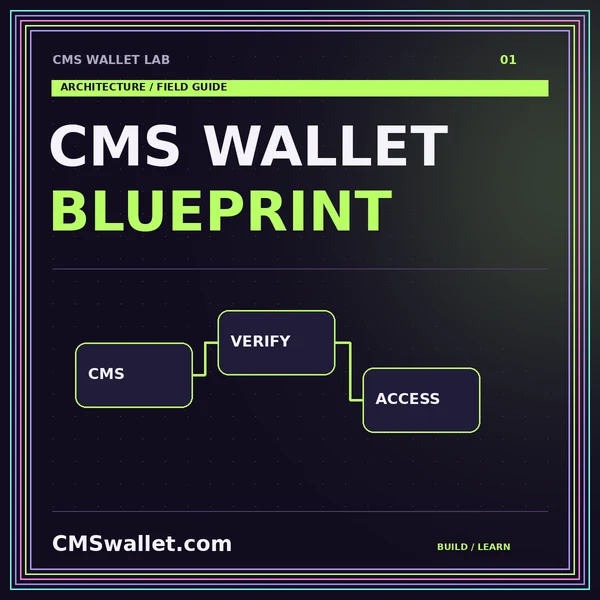
CMS Wallet Architecture: A Practical Integration Blueprint
Separate wallet connection, identity, permissions, and payments before building a CMS wallet integration.
Read the guideA practical starting point for connecting your publishing system to a wallet-aware experience. Define the reader’s task before choosing the connector.
CMSwallet.com uses CMS wallet to describe a wallet integration within a content management experience. It is a working category for builders, not the name of a single protocol. A publication might use a wallet for sign-in, an eligibility check, a payment flow, or a public account display. Those jobs need different evidence and different supporting components.
The Ethereum provider specification distinguishes provider connectivity from other application concerns. A connected provider can service chain requests; it does not by itself establish a CMS session. See the EIP-1193 interface definition for that technical boundary.
Start with the smallest useful reader task. A members library needs an identity and access design. A paid download needs order reconciliation and fulfillment. An informational dashboard may only need public data. Write the intended result in a sentence, then list what the first release explicitly does not offer.
Use the Ethereum guide for sign-in planning, the web3 guide for protected resources, and the cryptocurrency guide for asset and payment boundaries. Avoid combining all three into one unexplained “connect” state.
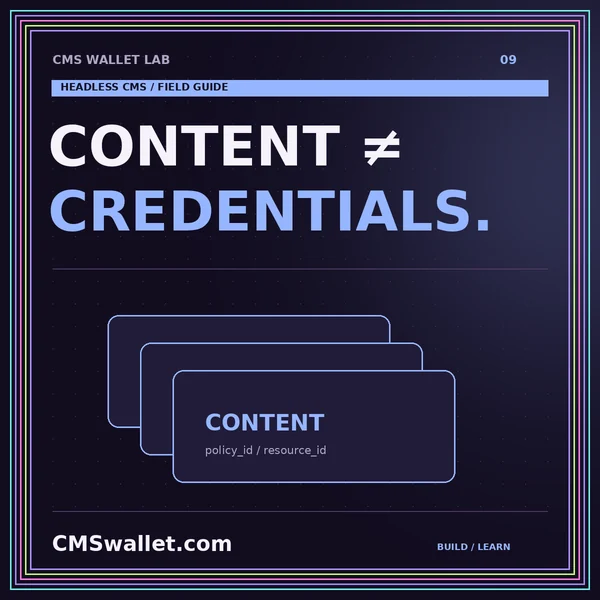
Let the CMS manage article titles, summaries, taxonomy, media descriptions, and editorial workflow. Let reviewed application services own verification and authorization. In your content model, refer to approved policies by stable identifiers instead of letting an ordinary tag silently grant access.
Public static content remains public. For a future membership application, keep private files outside the public export and review the service that releases them. This guide library is readable without connecting a wallet; its purpose is to help you plan that separate implementation.
Document the reader task, the intended network, the identity evidence, the protected resource, and the component allowed to decide access. Include cancellation, account switching, service outages, and recovery. Assign an owner to every boundary, including support.
Then work through the blueprint below. A small, explainable integration is easier to test than a broad interface whose success indicator tries to stand for identity, membership, and payment at once.
Separate wallet connection, identity, permissions, and payments before building a CMS wallet integration.
Read the guideReview secrets, scripts, permissions, protected content, payment recovery, and incident controls before release.
Read the guideModel public content, protected resources, and reviewed policy references without putting secrets in the CMS.
Read the guide