Ethereum CMS Wallet Sign-In: From Signature to Session
Design an Ethereum sign-in workflow with clear consent, challenge verification, account changes, and session boundaries.
Read the guideConnect an Ethereum identity to a CMS experience without confusing a signature with permission to spend or publish.
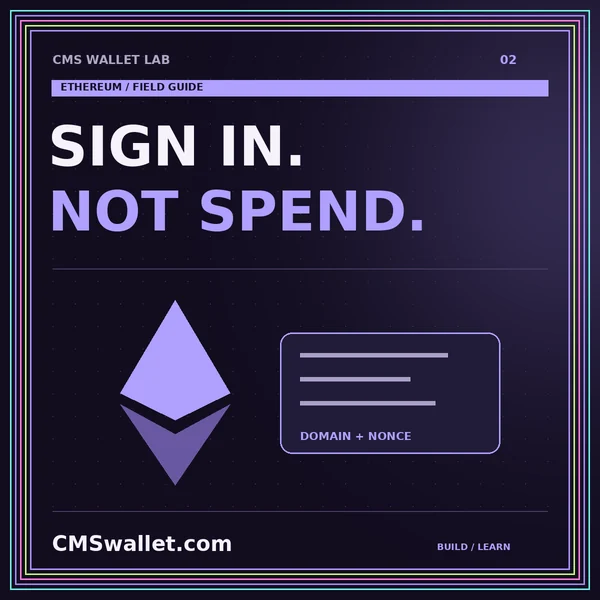
For an Ethereum CMS wallet project, decide whether the reader needs to authenticate, make a payment, or inspect public account data. A sign-in feature should explain the requesting site and the intended result before asking for a signature. Keep payment and token-approval interactions in separate, clearly described workflows.
Sign-In with Ethereum, ERC-4361, specifies a structured message and verification requirements for Ethereum-account authentication. The application still needs a session design and separate authorization rules for its resources.
For the proposed membership architecture, use a trusted verifier to evaluate the expected message context and signature. Associate each attempt with a defined challenge lifecycle. Decide how expiry, retries, simultaneous tabs, and reused attempts are handled. A wallet-selected address alone should not open protected resources.
Treat supported account types as an explicit compatibility decision. Record the exact environments and implementation versions tested. An unsupported account should receive an understandable explanation rather than repeated requests to sign the same unsuitable message.
Define what a verified reader session may do, how long it remains valid, and how it is ended. Reader identity should not imply editorial authority. Account linking, recovery, and a change of selected wallet need deliberate policies rather than an automatic reassignment of the existing profile.
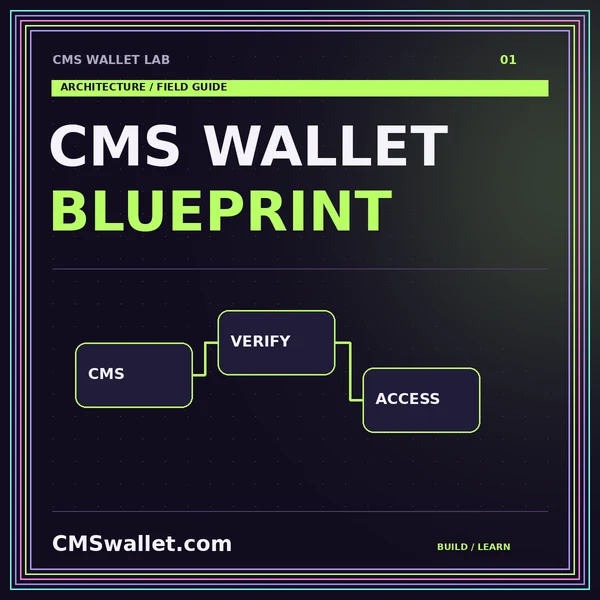
Use the CMS wallet architecture page to place identity services outside the editorial model. Use the web3 access guide to decide what evidence is required when delivering a protected article or file.
Walk through a valid sign-in, cancellation, wrong domain, expired challenge, altered message, account change, and service timeout. Preserve the resource the reader originally wanted so a successful retry returns them to the right place. Test mobile app switching through the entire journey.
The detailed lab guide below develops these decisions into a practical sign-in plan. It is an implementation reference, not an active authentication service or a request to connect your wallet here.
Design an Ethereum sign-in workflow with clear consent, challenge verification, account changes, and session boundaries.
Read the guideSeparate wallet connection, identity, permissions, and payments before building a CMS wallet integration.
Read the guideBuild a token-gated content plan around verified identity, explicit access rules, and protected resource delivery.
Read the guide