Headless CMS Wallets: Design a Clear Content Model
Model public content, protected resources, and reviewed policy references without putting secrets in the CMS.
Read the guideKeep editorial content easy to publish while identity services and access policies retain clear ownership.
A Content Management System wallet integration should not turn article templates into a second authorization engine. Keep ordinary fields focused on title, body, summary, imagery, taxonomy, and genuine editorial dates. Represent the relationship to a protected resource explicitly rather than hiding it inside a category name.
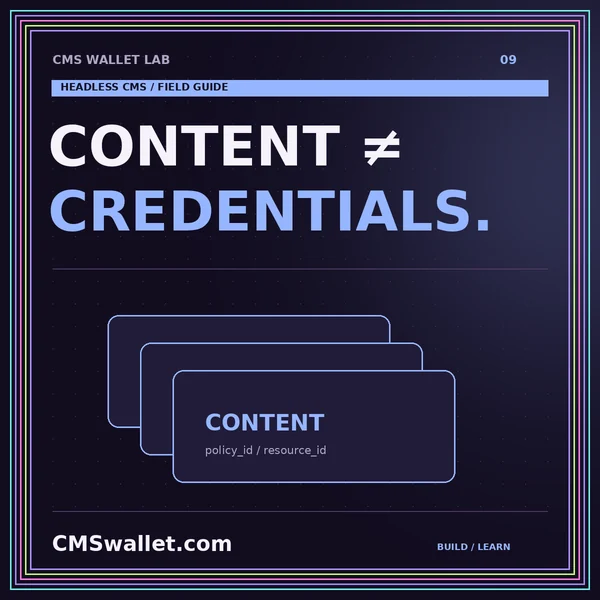
In the proposed model, a resource has a stable identifier and a reference to a reviewed access policy. Editors may assign approved policies according to their role; changing a policy’s operational meaning is a separate, authorized action.
A verified reader should not inherit the service credentials used to publish or retrieve administrative CMS records. The publishing service, editor, reader, and support reviewer have different responsibilities. Model them as different subjects even when they interact with the same content.
For a WordPress-backed implementation, the REST API authentication documentation explains authentication mechanisms and the need for appropriate capabilities. A wallet signature does not replace the permission checks required by the CMS API.
Create a reviewed set of fields that may be exported into the static website. Public descriptions and illustrations can explain a protected workshop without exposing its full recording or transcript. Keep private asset locations and operational credentials outside the public projection.
Include RSS, related-content cards, social previews, and generated data in the export review. A hidden field in the normal page does not help when another publication route serializes it. The web3 CMS wallet guide connects this modeling decision to protected delivery.
Walk a resource through draft, preview, approved policy assignment, publication, revision, and retirement. Decide which identifiers remain stable and how changes affect existing entitlements. Keep editorial modification dates separate from access-policy effective dates.
Validate missing resources and retired policy references before publishing. Give editors useful errors they can act on. Then test the whole lifecycle with separate editor, administrator, reader, and support roles. The detailed content-model article below turns these principles into an implementation brief.
Model public content, protected resources, and reviewed policy references without putting secrets in the CMS.
Read the guideSeparate wallet connection, identity, permissions, and payments before building a CMS wallet integration.
Read the guideEvaluate wallet plugins through permissions, account linking, payment behavior, compatibility, and an exit plan.
Read the guide