A CMS wallet project usually starts with a simple request: let readers connect a wallet. The difficult work begins immediately afterward. What does that connection prove? Which content should become available? Who handles a failed payment? A useful architecture answers those questions before choosing a button, a plugin, or a blockchain library.
Here, a CMS wallet means a wallet integration within a content management experience. It is a design pattern, not a promise that the CMS stores cryptocurrency. This guide develops an example for a small digital publication with public articles and a future members area. The proposed architecture deliberately separates reading, identity, access, and payment so that each can be tested on its own.
Start with the reader's job
Write one sentence describing the intended benefit. “A reader can prove control of an address to access a workshop recording” is specific enough to design around. “Make the website web3” is not. Decide whether the first release needs authentication, a payment option, an ownership display, or a membership rule. Avoid treating these as a mandatory bundle.
For the example publication, the public article library should remain readable without a wallet. Only a deliberate visit to the members area should introduce the sign-in flow. This keeps editorial discovery separate from integration failures. It also gives the team a usable first release while the protected delivery system is being built and reviewed.
Draw four separate boundaries
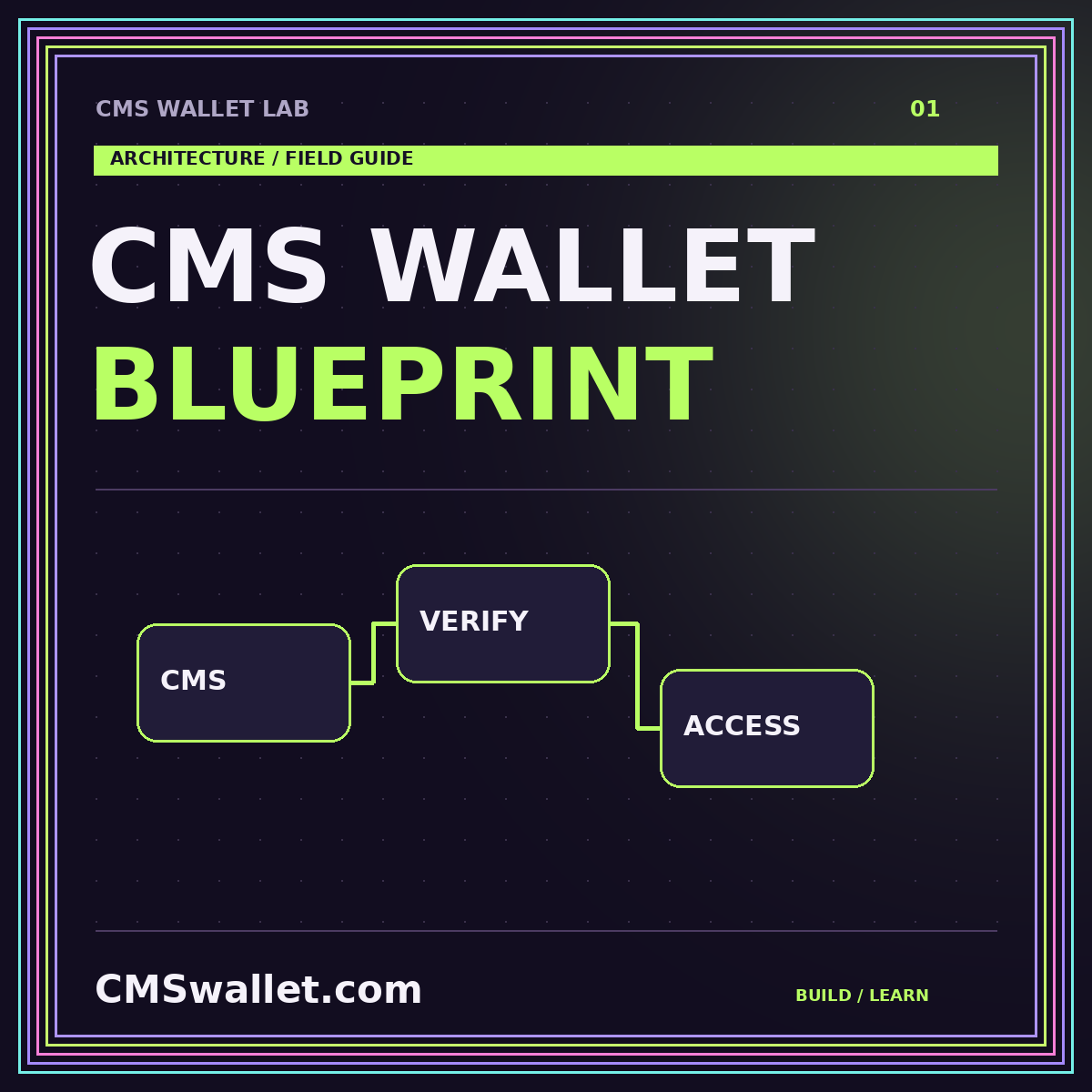
Use four boxes in the architecture diagram: content publishing, the reader interface, identity verification, and access decisions. Assign an owner to each box. The CMS owns article titles, summaries, authorship, and publication workflow. The browser presents the experience. A trusted verifier evaluates authentication evidence. An authorization component decides whether a verified identity may retrieve a specific resource.
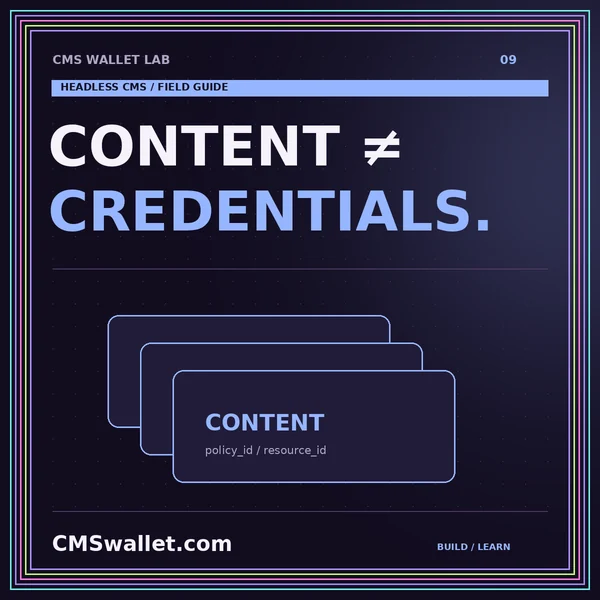
Do not let a CMS field quietly become an executable security policy. An editor may select a reviewed policy identifier, but changing an article's category should not grant administrator privileges. Similarly, a wallet address in a profile should be treated as a claimed identifier until the relevant verification process has completed. These boundaries make it easier to explain what a failed check actually means.
What the wallet connector does
For Ethereum integrations, the EIP-1193 provider specification defines a JavaScript request interface and events including account and chain changes. Its definition of a connected provider concerns the ability to service chain requests. That is not the same thing as establishing a CMS login session. This distinction is the central technical reference for the architecture in this guide.
Build the connector as an adapter rather than the owner of your publication's business rules. Let it report available accounts, the selected network, and user decisions. Route those results into explicitly named application states. That way, replacing a wallet interface does not require rewriting article permissions, invoice reconciliation, or editorial publishing behavior.
Model state instead of one success flag
A single connected: true flag is too vague for a complete reader journey. Use separate concepts for provider availability, account selection, verification progress, session validity, entitlement status, and payment status. The exact implementation can vary, but the names should express what evidence exists. “Address selected” and “member access approved” should never be interchangeable labels.
Consider a reader who changes accounts while a membership check is running. Associate the request with the account and network that started it. Before displaying its result, confirm that the active context still matches. A late response for the previous account should not overwrite the current reader's access state. Write this scenario into the acceptance tests before it becomes an intermittent production bug.
Keep the public website genuinely public
A static website can publish guides, explain supported workflows, and provide links into a separate application. It can also render public chain data in the browser when that capability has been intentionally implemented. It cannot turn a publicly delivered file into a private document merely by hiding an element. Anything shipped as an accessible asset needs to be considered public.
For the example publication, keep public summaries in the static export and store protected recordings outside that export. A separate delivery service should verify access before releasing the protected resource. Document the boundary in the project plan: the static editorial site is one deliverable, and a functioning membership system is another. The web3 CMS wallet guide explores this distinction in more detail.
Write a small data contract
Define the minimum fields exchanged between components. A useful access request might identify the resource, the verified subject, and the policy version. A useful decision might include allow or deny, the evaluation time, and a reason code suitable for internal support. Avoid returning raw provider responses to every part of the application when a smaller normalized result would do.
Separate internal explanations from reader-facing copy. An internal reason such as a stale evidence timestamp can become “We could not verify access just now” in the interface. Preserve enough context to investigate the problem without showing stack traces or exposing other readers' information. Give each attempt a request identifier so the browser, verifier, and support notes can refer to the same event.
Decide how identity changes work
Treat linking another wallet as its own account-management operation. In the proposed design, linking requires an existing verified session and fresh proof from the new address. Removing the final recovery method deserves a separate confirmation. Do not infer that two addresses belong to the same person because their display names, transfer history, or browser environment appear related.
Keep recovery policy understandable. Will a lost wallet mean lost access, or is there an independently verified recovery route? Who reviews exceptional cases, and what evidence is acceptable? A small publication may decide not to offer wallet-only accounts at all. That can be a coherent product choice rather than a technical failure, particularly when the support team cannot investigate ownership disputes.
Design the unhappy paths first
List the failures a reader can reasonably encounter: no wallet available, a declined request, the wrong network, an expired challenge, an unavailable verification service, or an access policy that does not match. Each needs a distinct next step. A declined request should leave the reader in control instead of triggering repeated prompts. An unavailable service should not be described as proof that the reader lacks membership.
Preserve the page the reader was trying to reach. After a successful retry, return to that resource rather than an unrelated dashboard. Keep retry behavior bounded, and avoid starting a payment again merely because the interface lost its response. The CMS wallet security checklist develops the failure-testing side of this architecture without requiring a particular wallet vendor.
Choose a release slice you can verify
For an initial implementation, choose one reader task, one supported network, and one reviewed access rule. A narrow release makes the test matrix easier to understand. Record the browsers and wallet environments actually tested. “Multi-wallet” should describe demonstrated behavior, not an assumption that all connectors implement every optional feature identically.
Before release, have someone unfamiliar with the implementation walk through sign-in, cancellation, account switching, and recovery. Ask them to explain what each screen authorizes. Confusion here often points to an unclear boundary rather than a missing animation. Also test the publication with JavaScript unavailable: public reading and navigation should remain useful even when the interactive application is elsewhere.
Conclusion: make every permission explainable
A good CMS wallet architecture is less about displaying a balance and more about knowing which component is allowed to decide what. Keep content publishing, wallet interaction, identity verification, and resource authorization separate. Define the evidence required for every transition, and make failure states visible without exposing sensitive details.
Use the CMS wallet overview to choose the first integration goal, then continue with the headless CMS content model. A small, clearly bounded system is a stronger foundation than a broad interface whose “connected” state tries to mean everything at once.